September 14, 2026
Hispanic Heritage Month Reading List
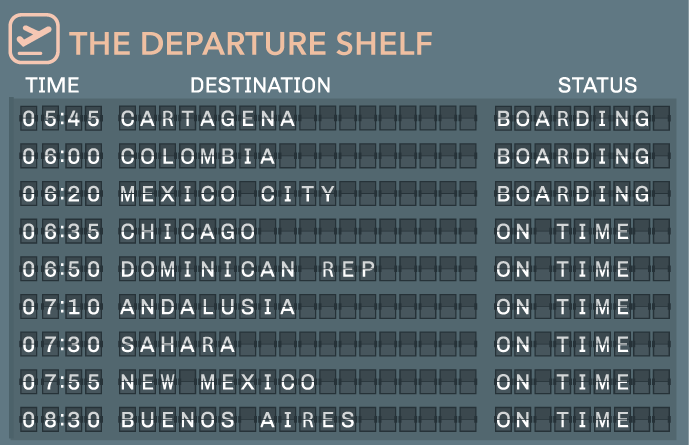
Hispanic Heritage Month runs from September 15 to October 15 — beginning on the independence day of five Latin American nations — and Latin American literature is one of the great traditions in world fiction. It gave us magical realism. It gave us Neruda and Borges, García Márquez and Allende, Sandra Cisneros and Junot Díaz. These six novels are an invitation to go where the stories are set.
The Departure Shelf is The Endpaper Society’s monthly reading list for travelers who want to go deeper.
One Hundred Years of Solitude by Gabriel García Márquez
Setting: Macondo, Colombia, 1820s–1930s
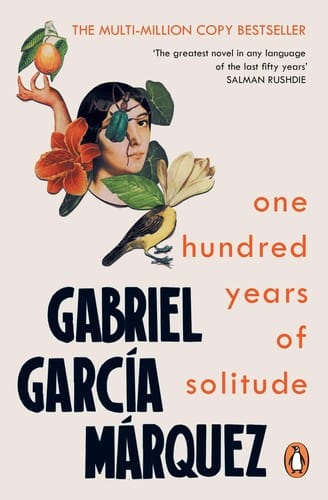
Seven generations of the Buendía family in the fictional town of Macondo — born of García Márquez’s childhood in Aracataca, Colombia, transmuted into myth. This is the novel that defined magical realism for the world, and it is still the most extraordinary thing García Márquez ever wrote: a cyclical history of a family and a country told as if memory and prophecy were the same thing.
Where it takes you: Aracataca, Colombia — García Márquez’s birthplace, which he visited once as an adult and said he recognized as Macondo — has a museum dedicated to his life and work. Cartagena, where he lived and wrote much of his later work, is a UNESCO World Heritage city with a Casa Museo García Márquez that is one of the finest literary museums in Latin America.
Like Water for Chocolate by Laura Esquivel
Setting: northern Mexico, around the time of the Mexican Revolution
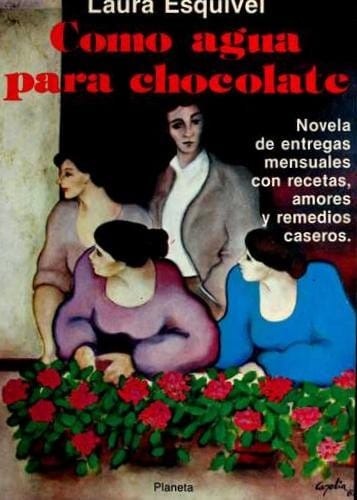
Tita de la Garza cannot marry because she is the youngest daughter, bound to care for her mother until the old woman dies. Her feelings pass into the food she cooks, and those who eat it experience whatever she felt while making it. Esquivel’s novel is structured around twelve recipes — one per chapter, one per month — and it is a book about desire, repression, and the extraordinary power of food as language.
Where it takes you: The northern Mexican state of Coahuila, where the novel is set, and the border region between Mexico and Texas that forms its landscape. Mexico City has excellent markets, cooking schools, and culinary heritage sites for anyone who wants to eat their way through this novel’s inspirations.
The House on Mango Street by Sandra Cisneros
Setting: Chicago, Illinois, 1960s–70s
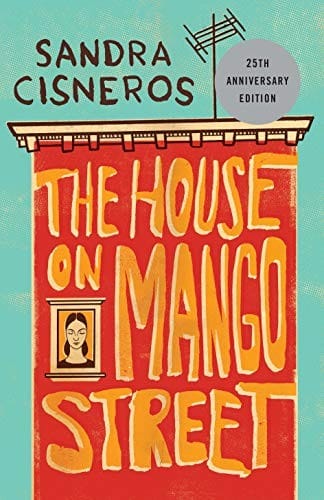
Esperanza Cordero narrates her childhood on Mango Street in a Chicago barrio — in short, lyrical vignettes that together build a portrait of a neighborhood, a community, and a girl who knows she must leave it even as she loves it. Cisneros grew up in Chicago in a Mexican-American family, and this novel is one of the great documents of Chicana experience in American literature.
Where it takes you: Chicago’s Pilsen neighborhood — one of the largest Mexican-American communities in the Midwest, now also one of the city’s most vibrant mural and arts districts. The contrast between Pilsen’s cultural richness and its economic pressures is the same tension Cisneros describes, and the murals alone are worth the trip.
In the Time of the Butterflies by Julia Alvarez
Setting: the Dominican Republic, 1938–1960
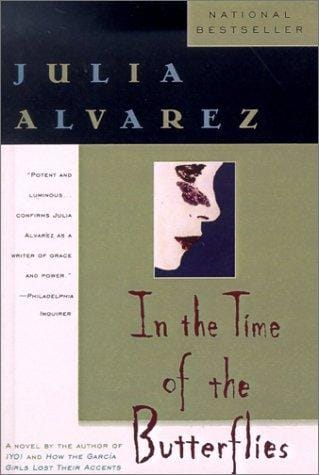
The Mirabal sisters — four women who became the most dangerous opponents of the Trujillo dictatorship — told through all four voices, including the one who survived. Alvarez’s novel asks what it takes to become a revolutionary, what it costs, and how the story gets told by the one who had to stay behind and keep telling it.
Where it takes you: The Dominican Republic — the Mirabal Museum in Salcedo, the roads of the Cibao Valley where the sisters were murdered, and the capital of Santo Domingo, which carries the weight of Trujillo’s long reign in every block of the old colonial city.
The Alchemist by Paulo Coelho
Setting: from Andalucía across North Africa to Egypt
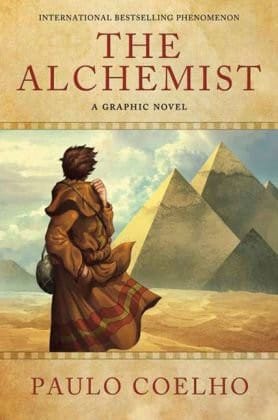
A young shepherd from Andalucía follows a dream to the Pyramids of Egypt, encountering the Soul of the World along the way. Coelho’s philosophical fable has sold more than 150 million copies in 80 languages — making it one of the best-selling books ever written. It is a travel novel at its core: about the journey mattering more than the destination, about the world conspiring in favor of those who pursue their dream.
Where it takes you: Andalucía — the markets of Tarifa, the crystalline light of the Spanish south — and the route across Morocco and North Africa that the novel traces. Marrakech and Fès are the obvious stops; the Saharan edges of Morocco are where the novel’s atmosphere becomes most palpable.
Bless Me, Ultima by Rudolfo Anaya
Setting: eastern New Mexico, 1940s
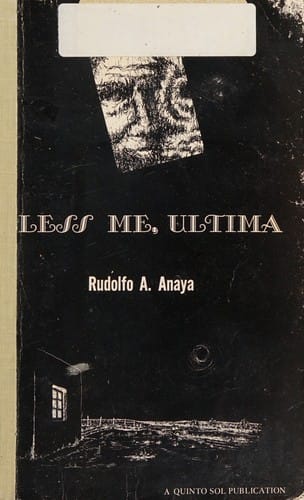
Antonio Márez is six years old when Ultima, a curandera — a healer — comes to live with his family on the New Mexico llano. Over the next years, she teaches him to read the land, to understand the old ways, and to hold two worlds — the Catholic and the indigenous — without letting either destroy the other. Anaya’s 1972 novel is the foundational work of Chicano literature and one of the great coming-of-age novels in American fiction.
Where it takes you: Eastern New Mexico — the high plains, the Rio Grande valley, the small towns between Santa Fe and the Texas border where Spanish, indigenous, and Anglo cultures have been negotiating their coexistence for four hundred years. This is a landscape most literary travelers drive through without stopping. Stop.
Latin American and Latino literature is an argument that the world is stranger, more beautiful, and more interconnected than realism can contain. Magical realism isn’t a genre — it’s a way of seeing. These novels will change what you see when you travel.
Planning a literary trip to Latin America or the American Southwest? Let’s talk.
Get the reading list first.
Trip announcements, curated reading lists, and the occasional dispatch — before anyone else.