July 31, 2026
National Parks Month Reading List
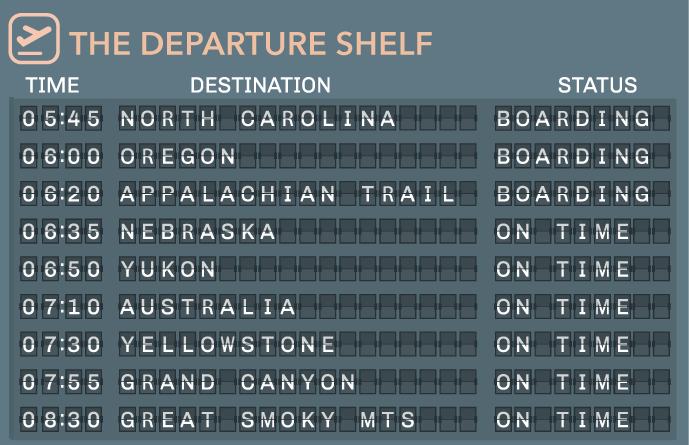
National Parks Month falls in July, when Americans are most likely to be in the car, driving toward something large and wild and worth the trip. These six books are for the road — for the hours before you arrive, when the landscape is changing outside your window and you need something that matches the scale of where you’re going.
The Departure Shelf is The Endpaper Society’s monthly reading list for travelers who want to go deeper.
Where the Crawdads Sing by Delia Owens
Setting: the North Carolina marshlands, 1950s–1960s
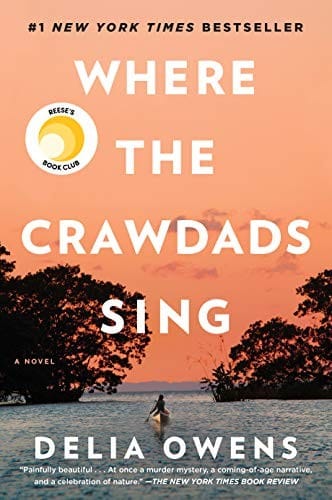
Kya Clark grows up alone in the marshes of the North Carolina coast — abandoned by her family, educated by the birds and the tides, sustained by a love of the natural world that no human being has managed to offer her. Owens, a wildlife scientist who spent years in the African bush, writes nature with the authority of someone who has actually lived in it. The marsh is not backdrop; it is protagonist.
Where it takes you: The Outer Banks of North Carolina — the barrier islands and coastal marshlands that are among the most ecologically remarkable landscapes in the American East. Bald Head Island, Topsail Island, and the Cape Lookout National Seashore are all within the novel’s emotional territory.
The Overstory by Richard Powers
Setting: across America, primarily the Pacific Northwest, 1960s–present
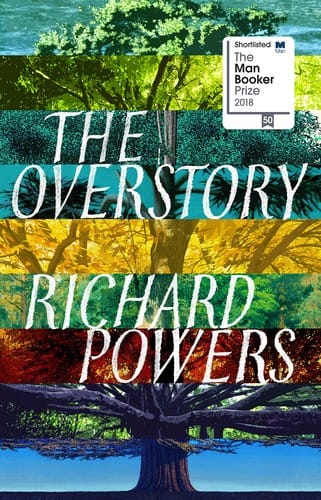
Nine Americans, connected by trees, find their lives intertwined in a multigenerational story about the radical act of paying attention to the natural world. Powers won the Pulitzer Prize for a novel that makes you physically unable to look at a tree the same way again. It is one of the most ambitious works of American fiction in decades and one of the most quietly devastating.
Where it takes you: The old-growth forests of the Pacific Northwest — the redwood groves of Northern California, the Douglas fir forests of Oregon and Washington, the ancient stands that remain in Olympic National Park. The novel’s tree-sit sections are based on real environmental protests in the forests of the Coast Range.
A Walk in the Woods by Bill Bryson
Setting: the Appalachian Trail, Georgia to Maine
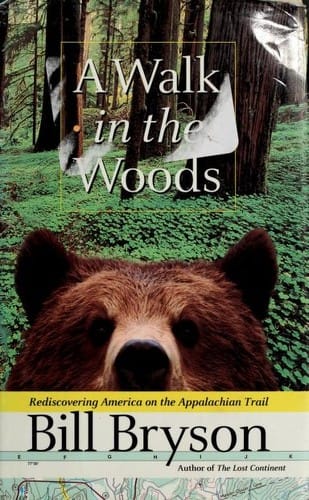
Bryson, freshly returned to America after twenty years in England, decides to hike the Appalachian Trail with a friend who is equally unqualified. The result is a comedy of American wilderness that is also, underneath the humor, a serious meditation on what wild places are for and what we lose when we lose them. The AT is 2,190 miles; they walked considerably less.
Where it takes you: The Appalachian Trail runs from Springer Mountain in Georgia to Katahdin in Maine, passing through fourteen states and some of the oldest mountains in the world. Even a day section near any access point — the Shenandoah, the Smokies, the White Mountains — is transformed by this book.
My Ántonia by Willa Cather
Setting: the Nebraska Prairie, 1880s–1910s

Jim Burden remembers Ántonia Shimerda, the Bohemian immigrant girl he grew up alongside on the Nebraska prairie. Cather’s novel is the great American novel of the Great Plains — a landscape that most literary culture treats as something to drive through on the way to somewhere interesting. She makes you feel the grass, the sky, the particular quality of silence that the prairie produces.
Where it takes you: Red Cloud, Nebraska — Cather’s hometown and the model for the fictional Black Hawk — has become a literary pilgrimage site, with the Willa Cather Foundation maintaining her childhood home and several sites associated with the novel. Homestead National Historical Park in Beatrice, Nebraska, tells the broader story of prairie settlement.
The Call of the Wild by Jack London
Setting: the Klondike Gold Rush, Yukon Territory, 1890s
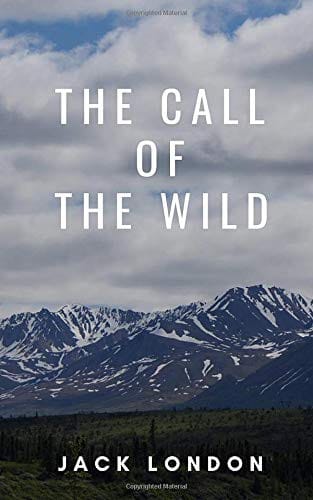
Buck, a domestic dog, is stolen from his California home and sold into service as a sled dog during the Klondike Gold Rush — and discovers, across the frozen north, an ancestral wildness he didn’t know he carried. London wrote this in 1903, drawing on his own time in the Yukon, and it remains one of the most visceral accounts of the Alaskan-Canadian north ever put on paper.
Where it takes you: Dawson City, Yukon — the Gold Rush capital, still improbably existing at the confluence of the Yukon and Klondike rivers — is one of the most extraordinary destinations in North America. The Klondike Highway from Whitehorse follows London’s route, and Denali National Park in Alaska carries the same wild energy the novel describes.
Tracks by Robyn Davidson
Setting: across Australia, from Alice Springs to the Indian Ocean, 1977
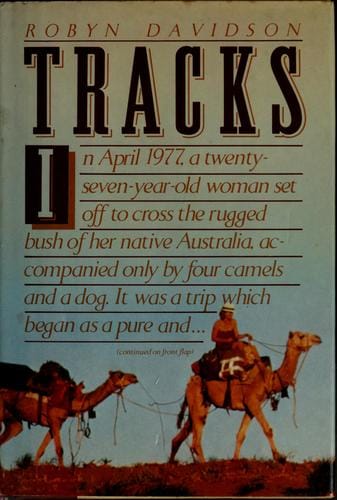
At twenty-seven, Robyn Davidson walked 1,700 miles across the Australian desert with four camels and a dog. Tracks is her account of that journey — and of what the desert does to a person who spends nine months in it. It is one of the great adventure memoirs and one of the most honest accounts of what it actually feels like to be alone in a landscape large enough to reduce you to your actual size.
Where it takes you: The Australian Outback — specifically the traditional lands of the Western and Central Desert peoples, crossing through landscapes that Davidson describes with the precision of someone who walked every step. Uluru-Kata Tjuta National Park sits within her route and is the spiritual heart of this territory.
The natural world is the oldest library there is. These six books are field guides to listening to it. Take them with you when you go — or let them tell you where to go next.
Planning a national parks road trip or wilderness travel? Let’s talk.
Get the reading list first.
Trip announcements, curated reading lists, and the occasional dispatch — before anyone else.