June 30, 2026
The Reading List for the World's Most Beautiful Libraries
A beautiful library is never just a building. It’s a statement about what a civilization decided to keep. The architecture tells you what they valued. The collection tells you what they feared losing.
These twelve libraries are destinations in their own right — places where the room itself changes the way you think about reading. But each one is better if you arrive having already read something that connects you to the place, the collection, or the idea behind it.
Here’s the reading list.
1. Trinity College Library — Dublin, Ireland
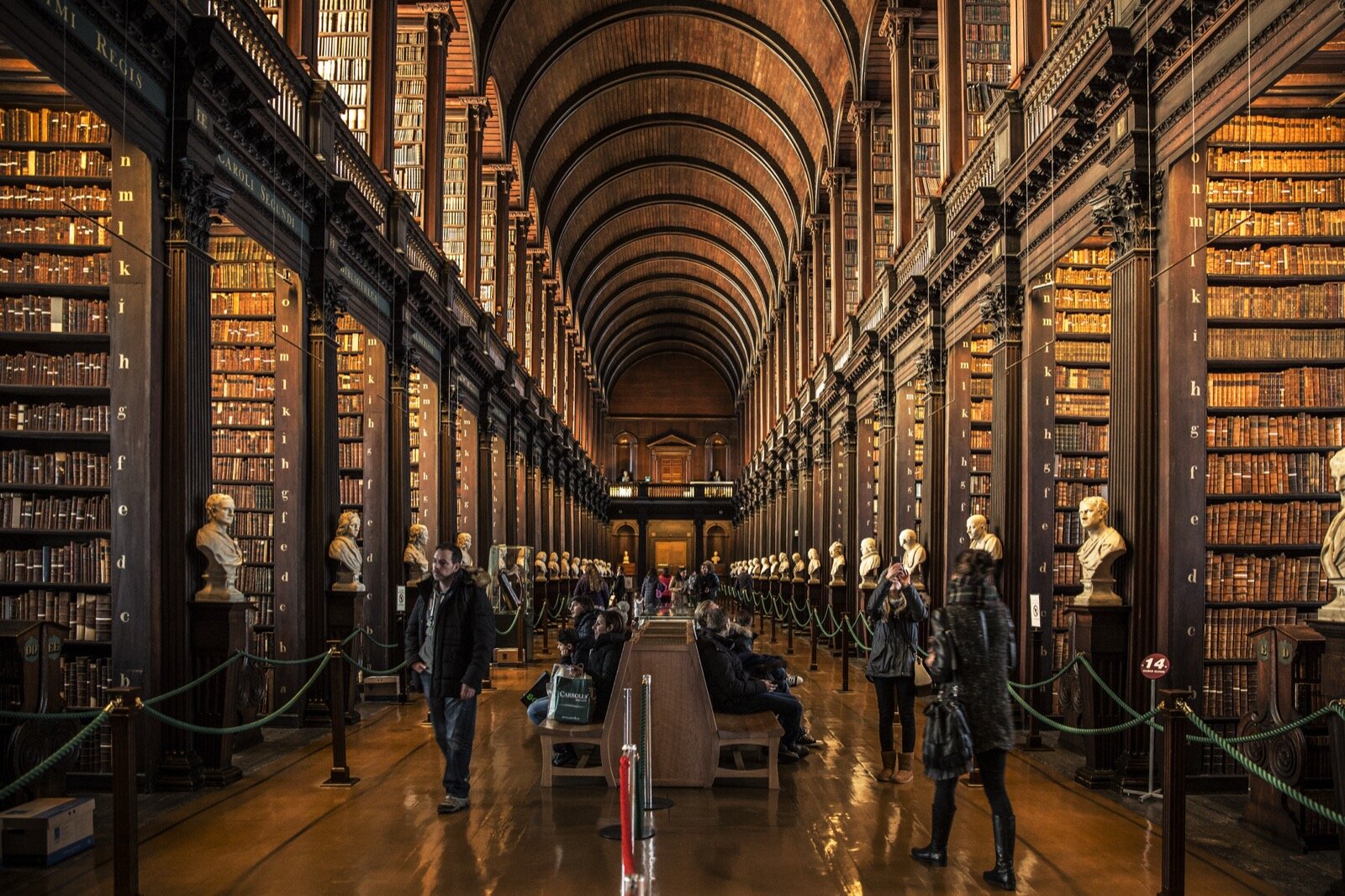
The Long Room stretches 65 meters, lined with marble busts and 200,000 of the library’s oldest books. The Book of Kells — a 9th-century illuminated manuscript of the four Gospels — lives in the exhibition below. Everyone compares it to Hogwarts. It’s better than Hogwarts, because it’s real, and the books aren’t decoration.
Read before you go: How the Irish Saved Civilization by Thomas Cahill. Cahill argues that Irish monks — exactly the kind of people who created the Book of Kells — preserved Western literature during the Dark Ages by copying manuscripts while the rest of Europe burned. You’ll walk into the Long Room understanding that this isn’t a museum. It’s a rescue mission that lasted centuries.
2. Duke Humfrey’s Library, Bodleian — Oxford, England
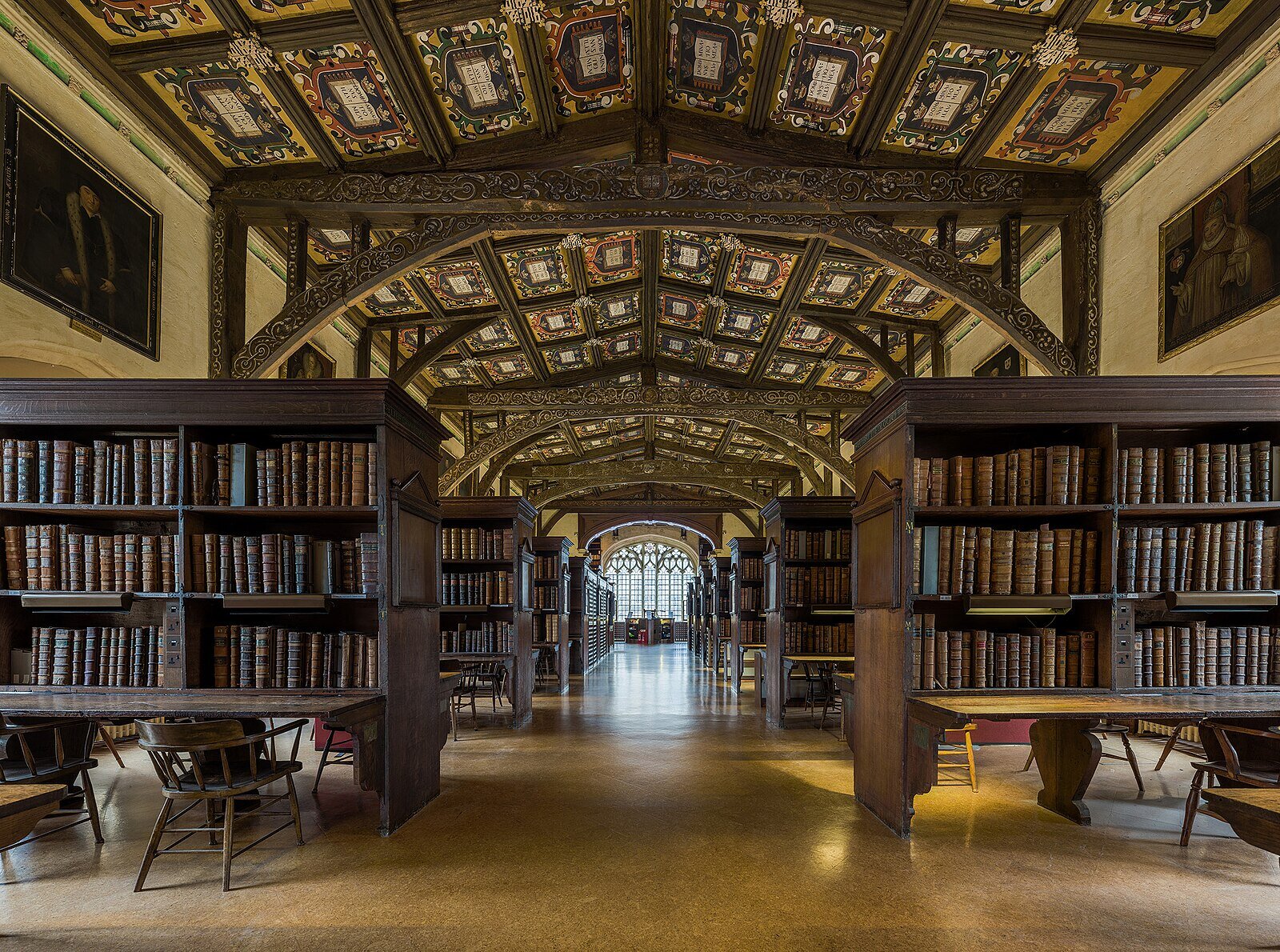
The oldest reading room in the Bodleian, built in the 15th century, with painted ceiling panels and chained oak bookcases. This is where scholars have sat for 600 years. The air smells like old wood and responsibility.
Read before you go: Brideshead Revisited by Evelyn Waugh. Not because it’s set in the Bodleian — it isn’t — but because no novel captures the seductive weight of Oxford better. You’ll understand why people build libraries like this: because knowledge, like memory, needs a house beautiful enough to live in.
3. Admont Abbey Library — Admont, Austria
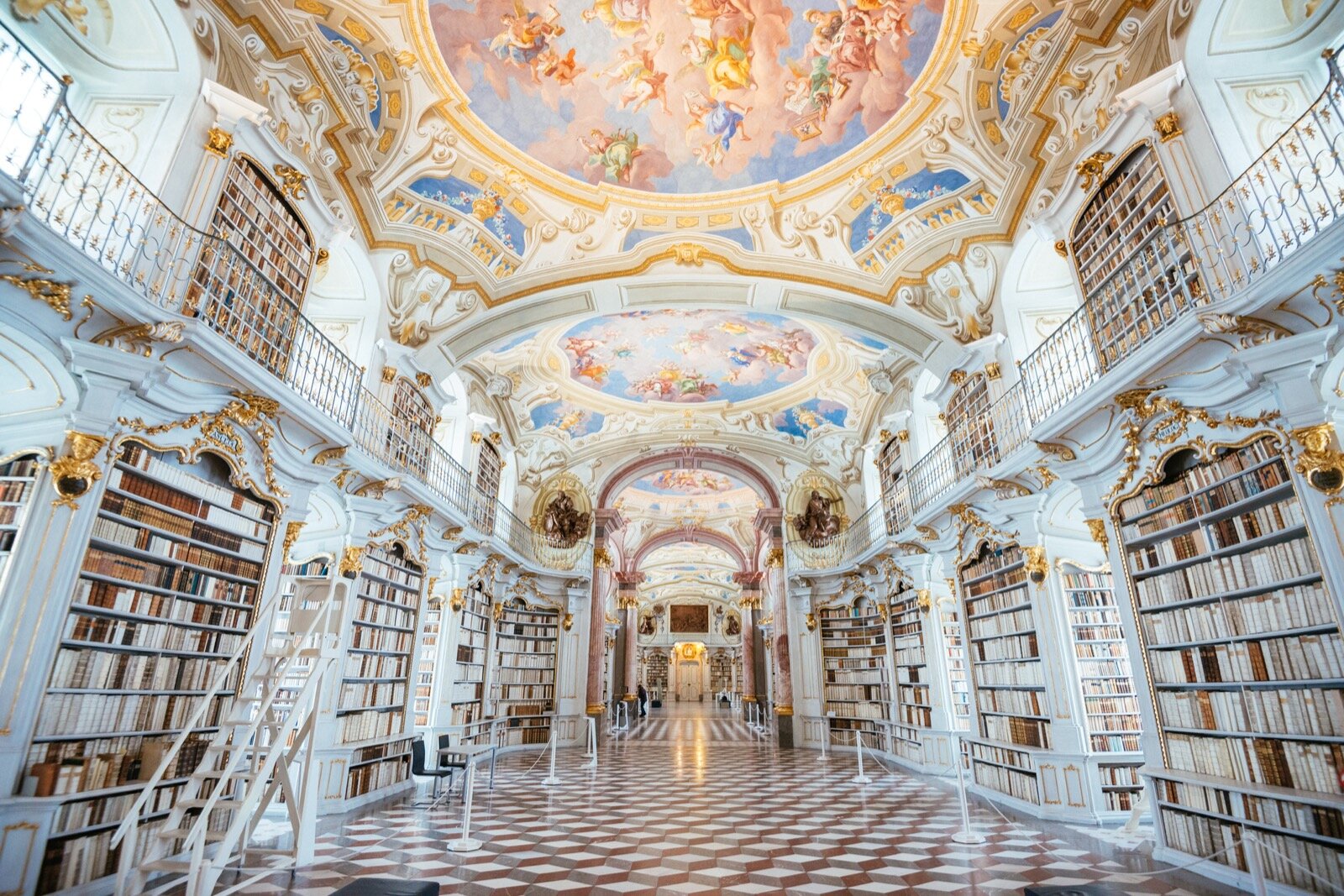
The world’s largest monastic library. Completed in 1776, it’s a Baroque cathedral of white shelving and gold accents, with seven ceiling frescoes depicting the stages of human knowledge from beginning to end. The all-white design was deliberate — meant to reflect the light of the Enlightenment.
Read before you go: The Name of the Rose by Umberto Eco. A murder mystery set inside a medieval monastery library — where the books themselves are dangerous, and the librarian is the gatekeeper between knowledge and the world. Eco understood that libraries are never neutral spaces. They’re arguments about who gets to know what.
4. Abbey Library of St. Gallen — St. Gallen, Switzerland
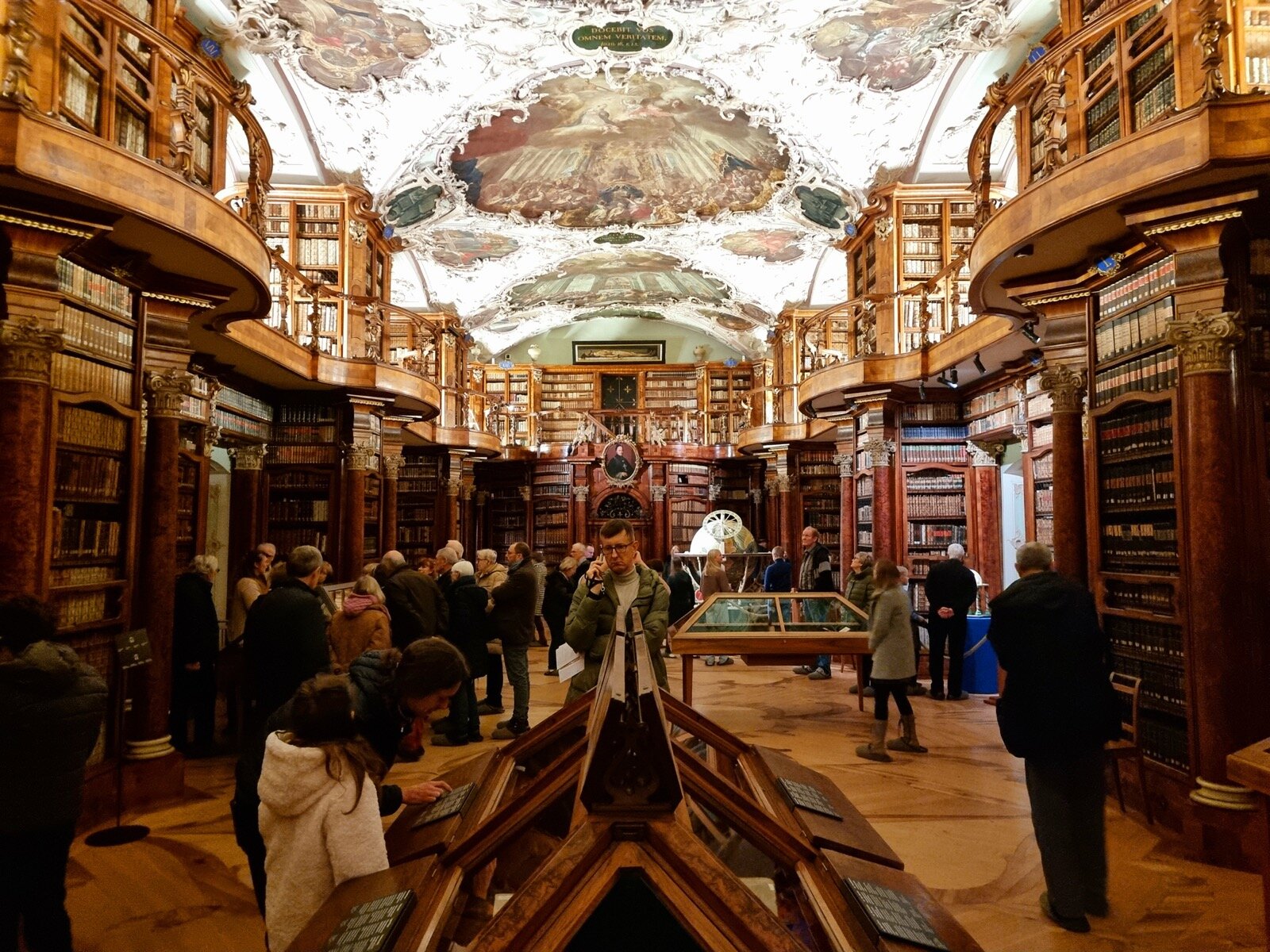
One of the oldest libraries in the world, tracing its origins to the 8th century. A UNESCO World Heritage Site with a Rococo hall completed in 1767, gleaming wood floors (you wear felt slippers to enter), and manuscripts that predate the printing press by seven hundred years.
Read before you go: The Monk of Mokha by Dave Eggers. Not about this library — but about the persistence of knowledge across centuries and borders. The monks of St. Gallen spent lifetimes copying texts by hand. Eggers writes about a man who crosses the world to recover a lost coffee tradition. Both stories are about refusing to let something valuable disappear.
5. Sainte-Geneviève Library — Paris, France
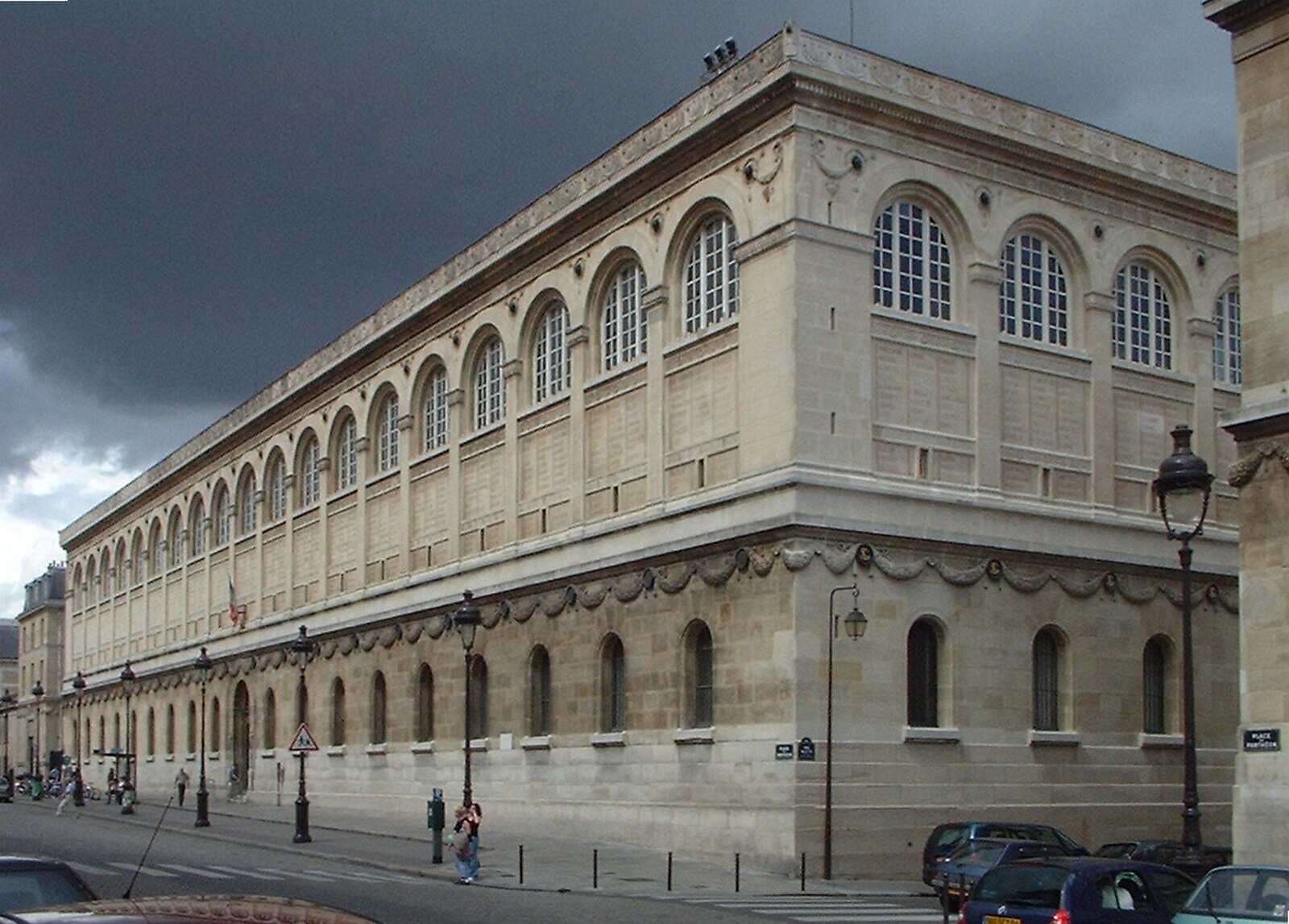
Overlooking the Panthéon, this 19th-century masterpiece pioneered the use of iron-and-glass architecture in public buildings. Thin iron columns support a double-barreled roof. The reading room glows. Collections date to the 6th century, but the building itself is a monument to the idea that libraries should be for everyone, not just monks and aristocrats.
Read before you go: The Paris Wife by Paula McLain. Hemingway and Hadley in 1920s Paris, when the city was the capital of literary ambition. The Sainte-Geneviève is exactly the kind of place young Hemingway would have sat, pretending not to be impressed while being completely overwhelmed.
6. Strahov Monastery Library — Prague, Czech Republic
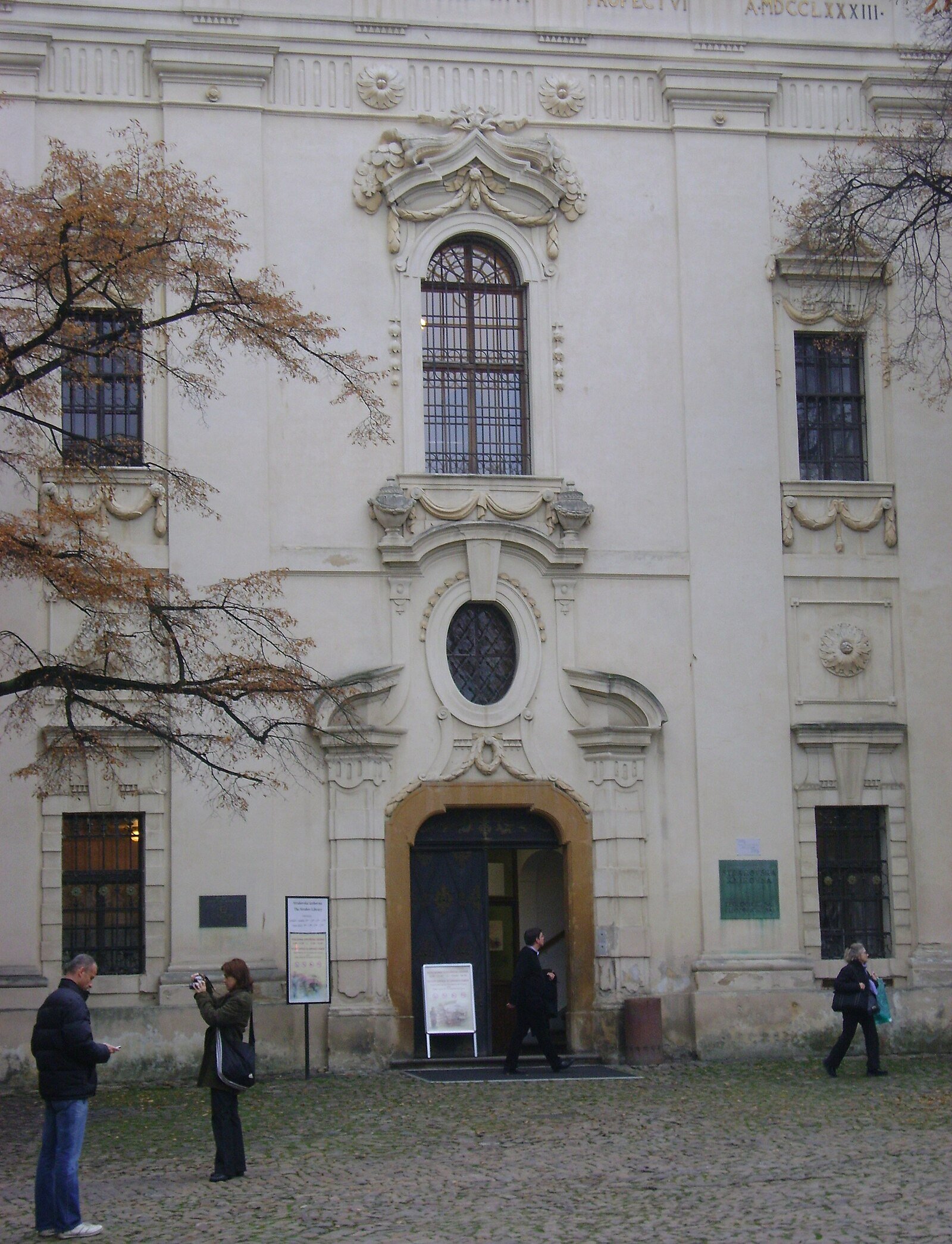
Two halls: the Theological Hall (1679, Baroque, ceiling frescoes of learning methods) and the Philosophical Hall (1794, two stories of walnut shelving, a ceiling fresco that took six months to paint). The monastery has been operating since 1143. The library survived wars, occupations, and communism by being too beautiful to destroy.
Read before you go: The Unbearable Lightness of Being by Milan Kundera. Prague’s literary soul is inseparable from its political history. Kundera wrote about the weight of living under a regime that controlled what you could read, say, and remember. The Strahov Library survived because the monks understood something Kundera’s characters learned the hard way: the things you preserve define you.
7. Royal Portuguese Cabinet of Reading — Rio de Janeiro, Brazil
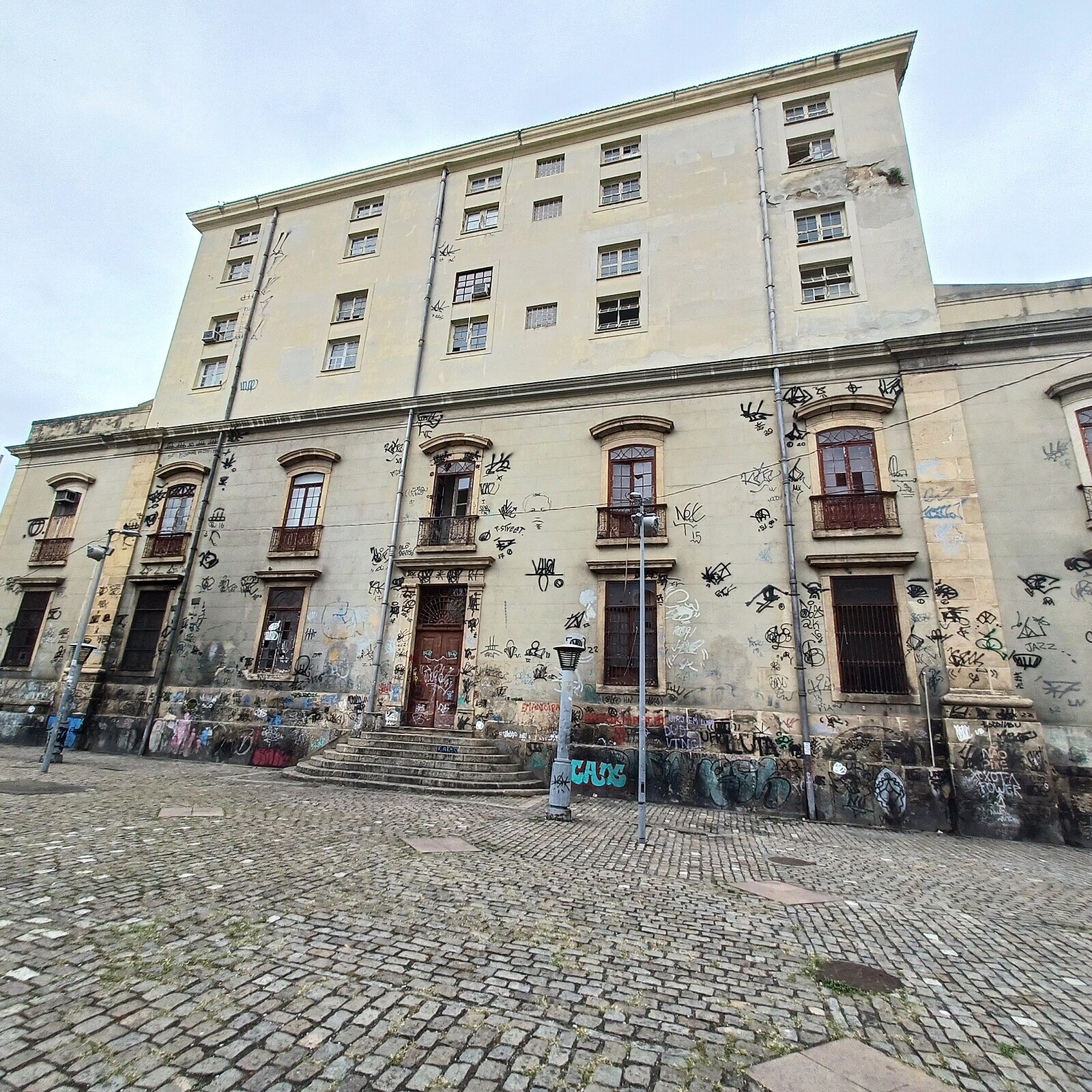
A Neo-Manueline jewel box in downtown Rio, built by Portuguese immigrants in the 1880s who wanted to preserve their literary heritage in a new world. Over 350,000 volumes. Carved oak galleries, ornate moldings, and a central skylight that turns the whole room into stained glass.
Read before you go: The Posthumous Memoirs of Brás Cubas by Machado de Assis. The greatest Brazilian novel, written in Rio in 1881 — the same decade this library was being built. Machado de Assis was the grandson of freed slaves who became the most important writer in Latin American literature. His narrator tells the story of his own life from beyond the grave, with the kind of irony that only a self-taught genius could pull off.
8. Cuypers Library — Amsterdam, Netherlands
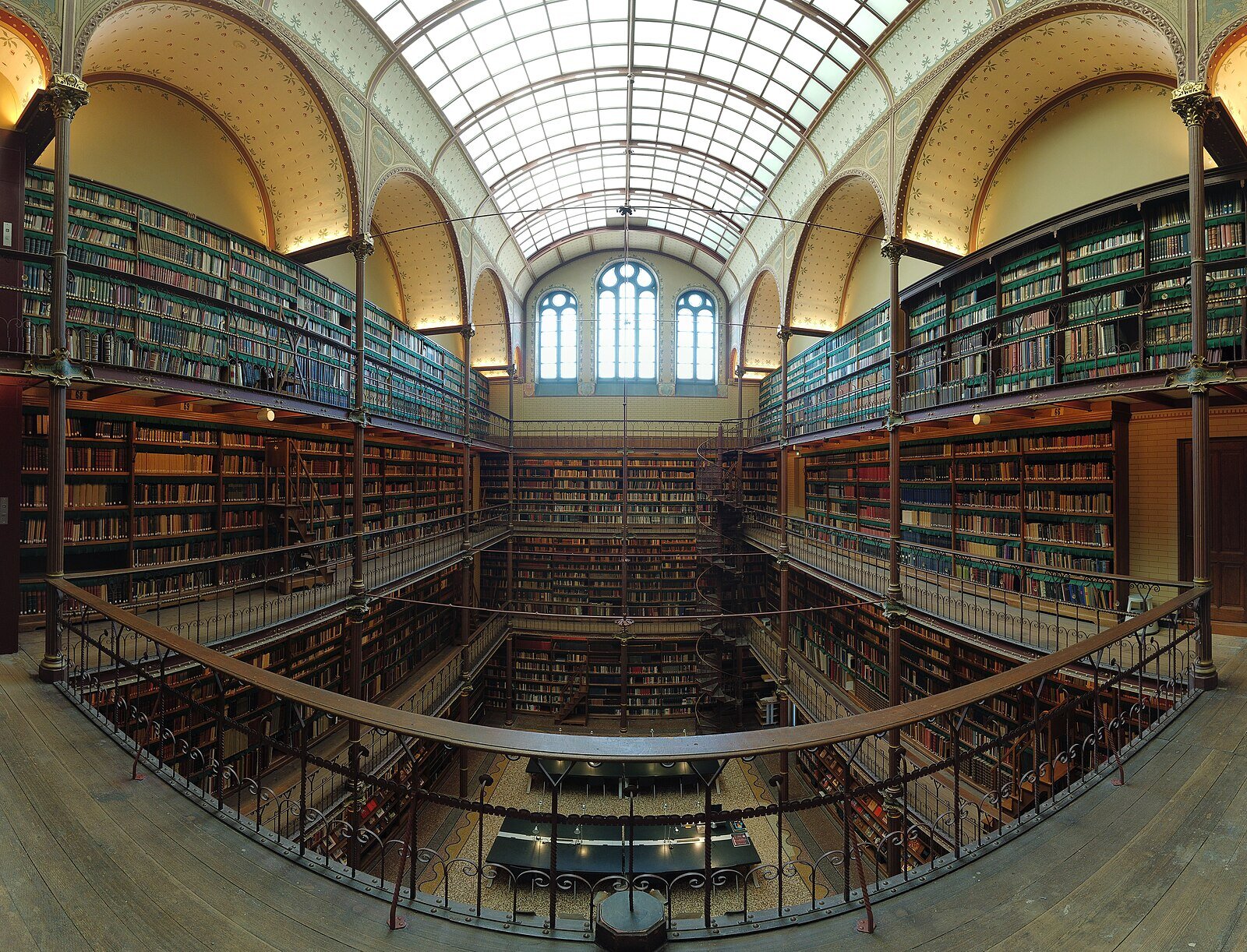
Hidden inside the Rijksmuseum, this Neo-Gothic research library was designed by Pierre Cuypers in 1885. It’s technically an art history library — 450,000 volumes on Dutch art and culture — but the room itself is the masterpiece. Cast-iron columns, natural skylighting, and the quiet shock of finding a library this beautiful inside a museum you came to see Rembrandts.
Read before you go: Girl with a Pearl Earring by Tracy Chevalier. A novel about looking closely — at a painting, at a person, at the light falling across a room in Delft. The Cuypers Library is a room that rewards exactly that kind of attention.
9. Biblioteca Joanina — Coimbra, Portugal
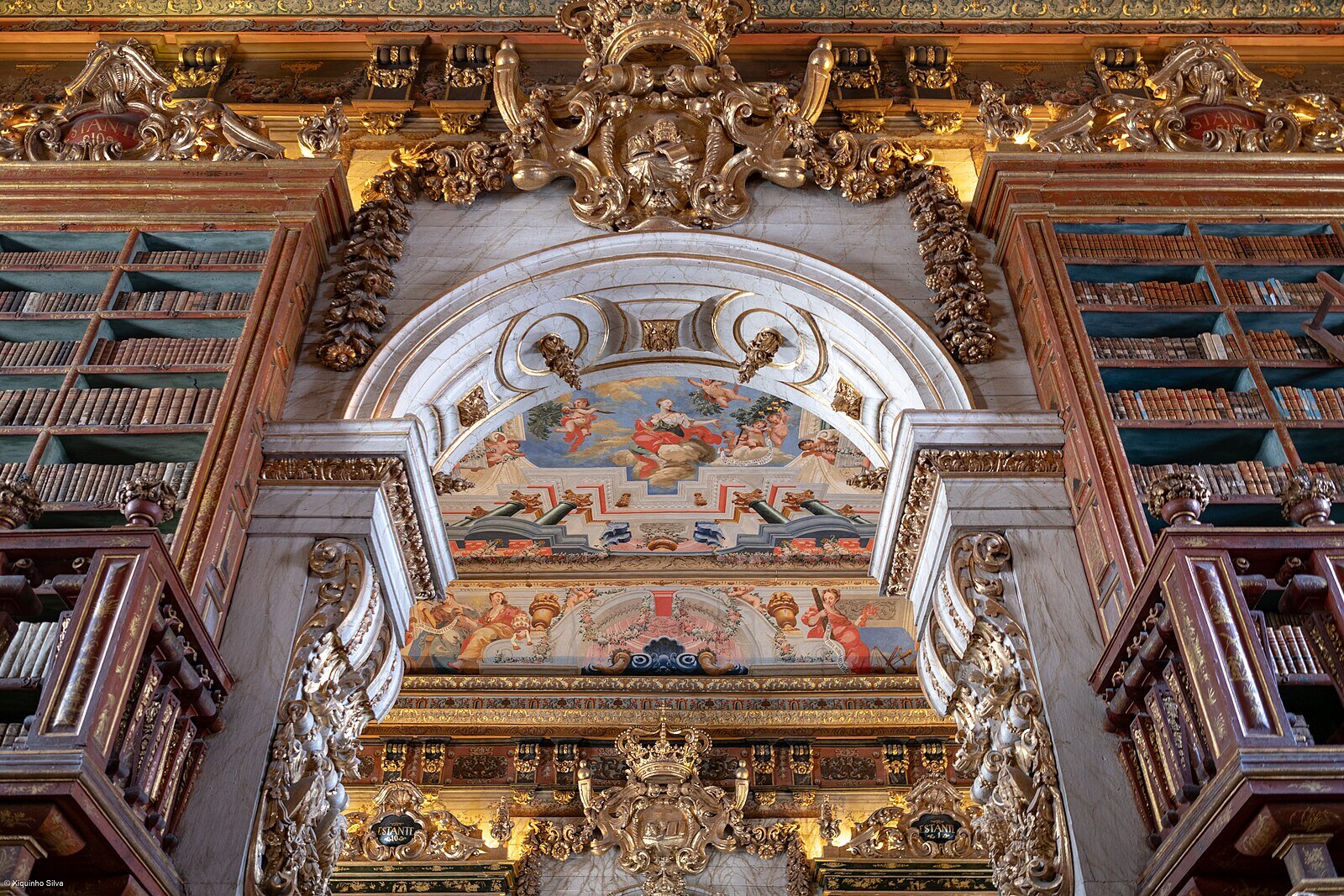
Baroque excess at its finest, built in the 18th century for King João V. Three ornate rooms connected by painted arches. But the best detail is invisible: a colony of bats lives behind the bookshelves. Every night they emerge to eat the insects that would otherwise destroy the books. The librarians lay leather sheets over the tables to protect them from droppings. The bats have been doing this job for three hundred years.
Read before you go: Blindness by José Saramago. Portugal’s Nobel laureate wrote about a city where everyone suddenly goes blind — and what happens to civilization when nobody can read, navigate, or recognize each other. Then walk into the Joanina and consider what it means that a society built a room this beautiful just to hold books, and hired bats to guard them.
10. George Peabody Library — Baltimore, USA
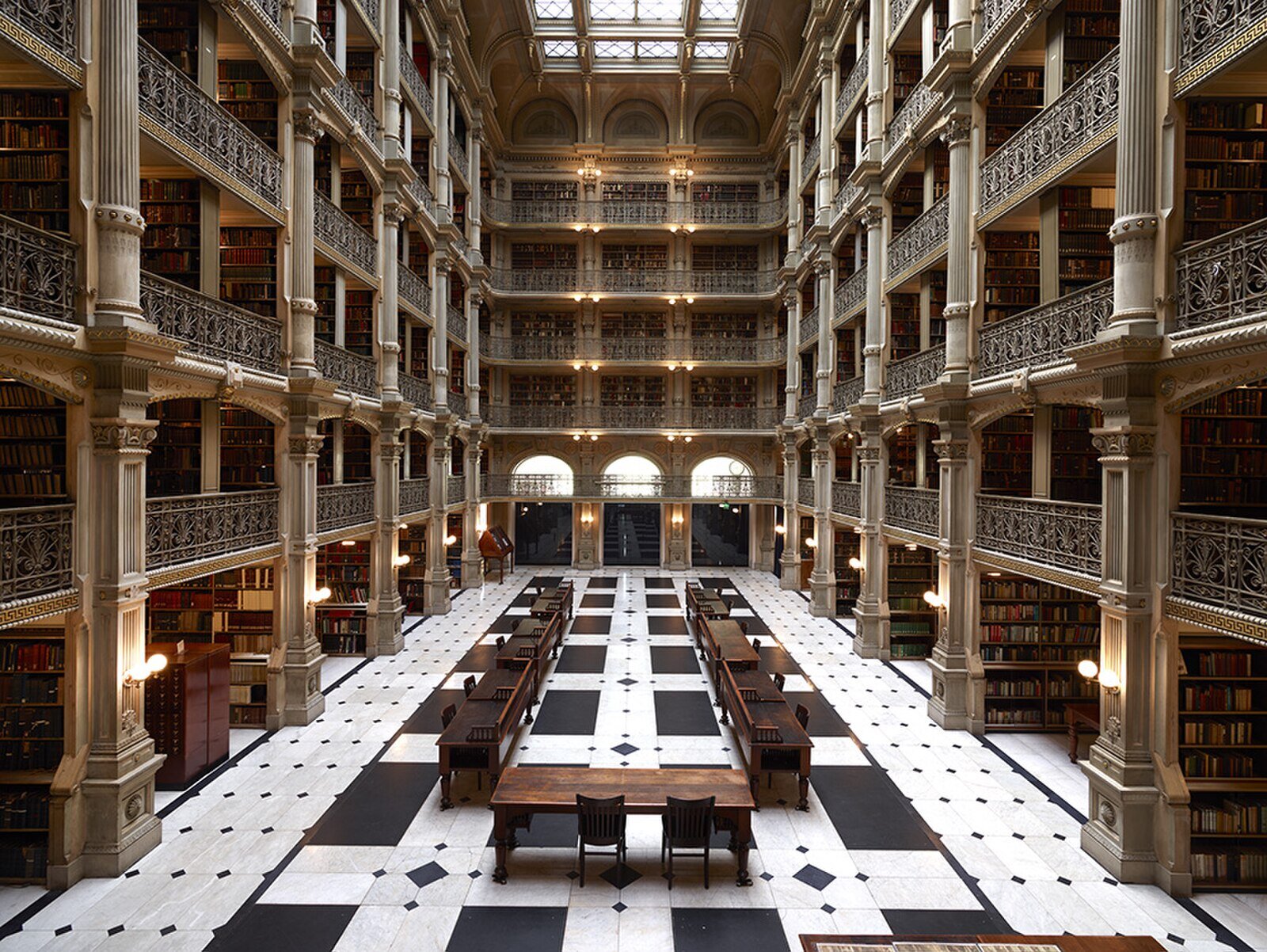
Five tiers of ornamental cast-iron balconies surrounding a soaring atrium topped with a skylight 61 feet above the floor. Built in 1878 as a gift to the city of Baltimore from the philanthropist George Peabody. It’s free and open to the public — a cathedral of books in a city that doesn’t always get the credit it deserves.
Read before you go: The Known World by Edward P. Jones. Jones won the Pulitzer for this novel about Black slaveholders in antebellum Virginia — just south of Baltimore. It’s a book about the complexity of American history, told with the kind of moral seriousness that a library like the Peabody was built to protect.
11. Livraria Lello — Porto, Portugal
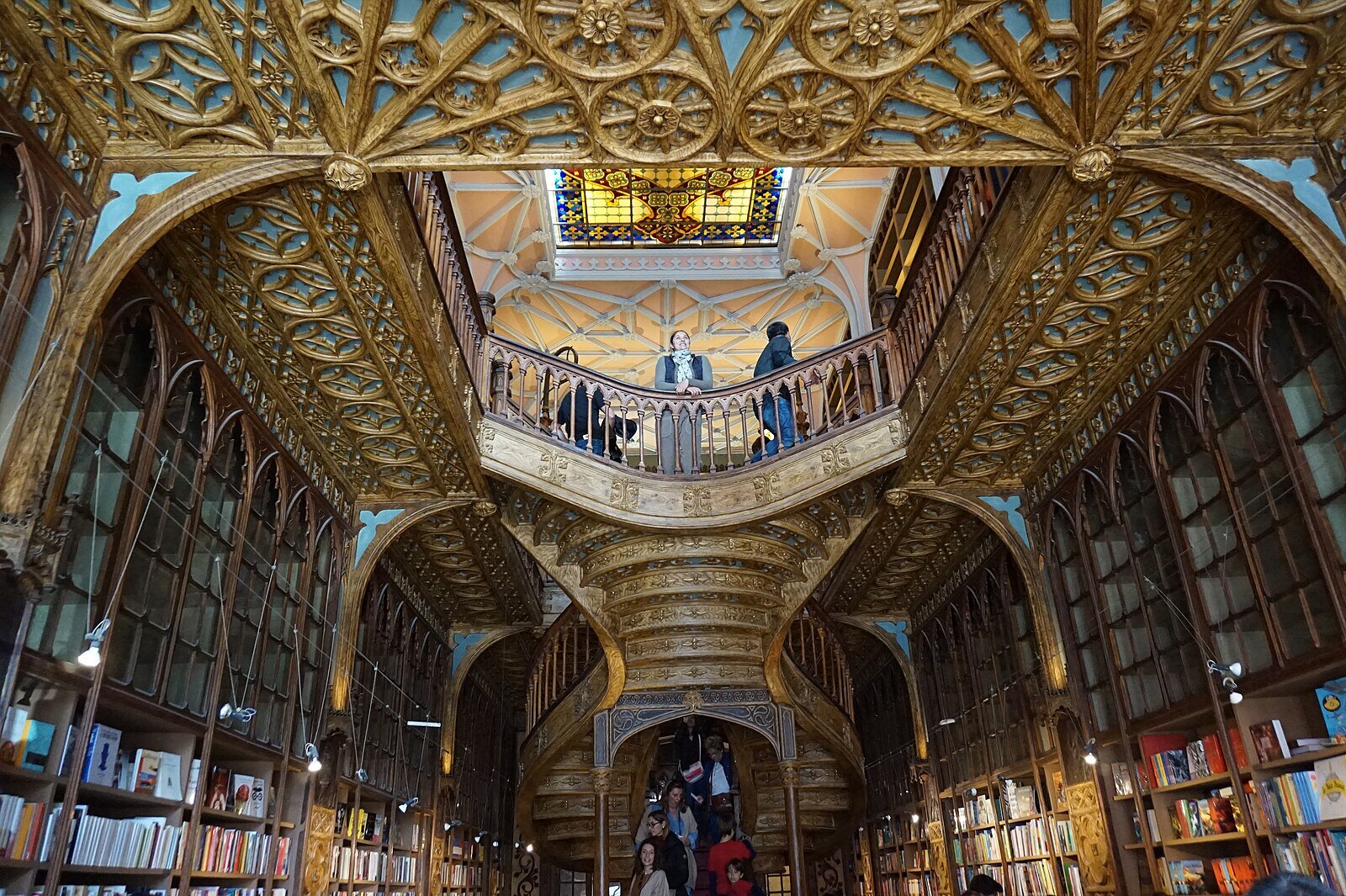
Technically a bookshop, not a library — but the crimson staircase, the stained glass ceiling, and the carved wood interior make it impossible to leave off any list. Built in 1906 in Neo-Gothic style. The legend that it inspired J.K. Rowling is probably apocryphal (she lived in Porto in the early ’90s but has denied the connection), but the building doesn’t need the association. It’s extraordinary on its own.
Read before you go: The Book of Disquiet by Fernando Pessoa. Pessoa spent his life in Lisbon, not Porto, but his fragmented, melancholy masterpiece captures the Portuguese literary temperament better than anything else. Read a few entries before you climb that staircase, and the building will feel less like a tourist attraction and more like a monument to the kind of people who build their most beautiful rooms around books.
12. New York Public Library, Stephen A. Schwarzman Building — New York, USA
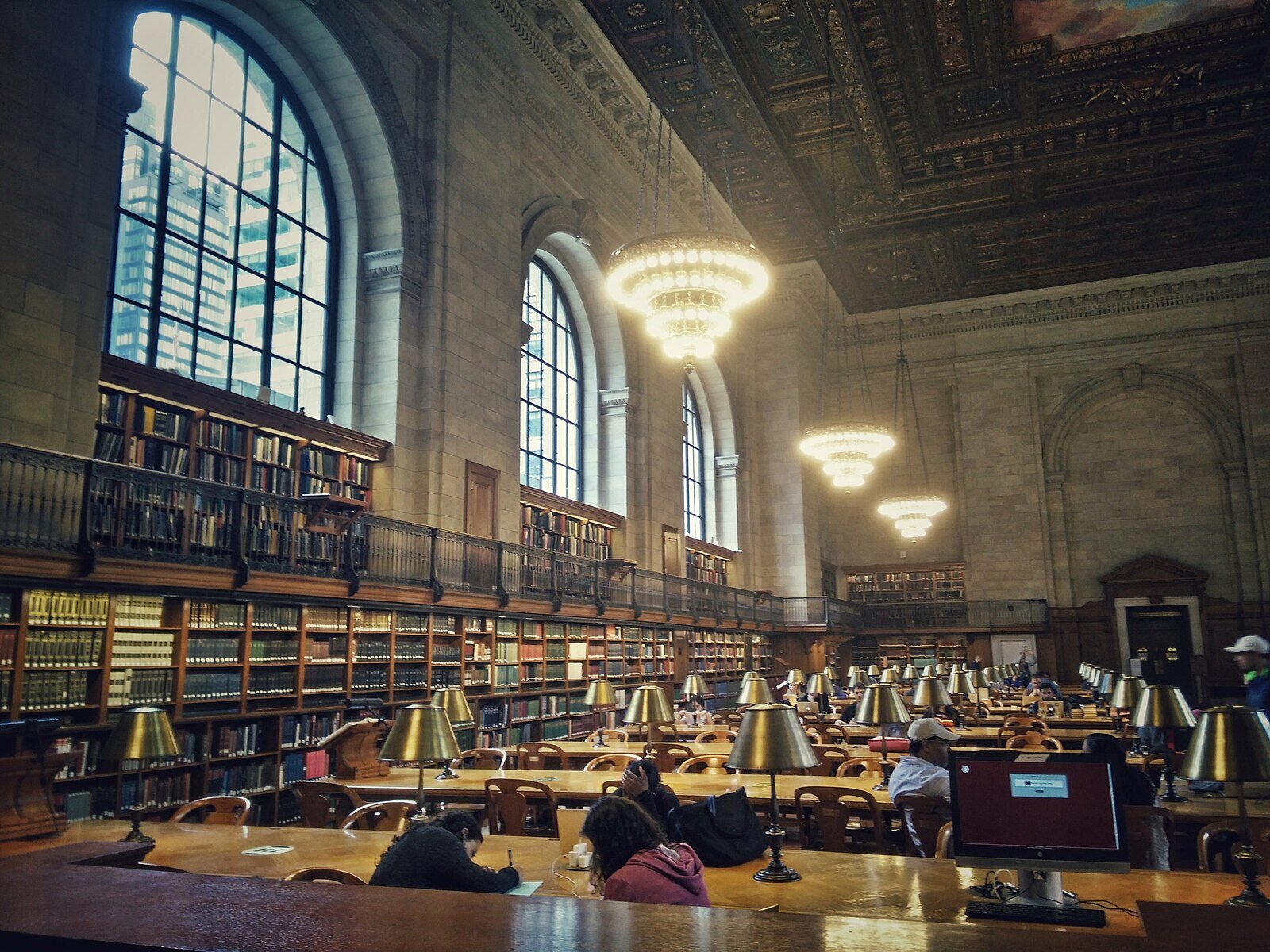
The Rose Main Reading Room: 78 feet wide, 297 feet long, with a painted ceiling depicting open sky and clouds. The lions out front — Patience and Fortitude — were named during the Depression, because those were the qualities New Yorkers would need to get through it. The library is free, open to everyone, and remains one of the most democratic spaces in the most expensive city in the world.
Read before you go: The Great Gatsby by F. Scott Fitzgerald. Not because it’s set in a library — but because Gatsby understood something about New York that the NYPL embodies: the city promises that reinvention is possible, that the past doesn’t have to define you, and that the most beautiful things are sometimes built for people who haven’t arrived yet.
The trip that plans itself
If you look at the map, these twelve libraries cluster into three natural itineraries:
The Central European Route: Vienna → Admont → St. Gallen → Prague → Amsterdam — monasteries, manuscripts, and the Enlightenment.
The Iberian Route: Porto → Coimbra → Lisbon — bookshops, bats, and three centuries of Portuguese literary culture.
The British Isles Route: Dublin → Oxford → London — from the Book of Kells to the Bodleian to the British Library (a bonus thirteenth stop you won’t be able to resist).
If any of these routes interest you, get in touch. I’d love to build a library pilgrimage around your reading list.
Photo credits: Duke Humfrey's Library by Diliff, CC BY-SA 3.0. George Peabody Library by Carol M. Highsmith, CC BY-SA 4.0. Rose Main Reading Room by Los Paseos, CC BY-SA 2.0. Strahov Monastery by Paulo Cerqueira, CC BY-SA 3.0. Sainte-Geneviève Library by Pol, CC BY-SA 3.0. Livraria Lello by Matt Kieffer, CC BY-SA 2.0. Biblioteca Joanina by xiquinhosilva, CC BY 2.0. Cuypers Library by Jedesto, CC BY-SA 4.0. Royal Portuguese Cabinet by Joalpe, CC BY-SA 4.0. All via Wikimedia Commons.
Get the reading list first.
Trip announcements, curated reading lists, and the occasional dispatch — before anyone else.