August 14, 2026
Women's Equality Month Reading List
Women’s Equality Month is observed in August, marking the anniversary of the 19th Amendment’s ratification on August 26, 1920. These six novels are about women who refused to accept the world as it was handed to them — in government-issued uniforms, in the roles their mothers occupied, in the silence that was expected of them.
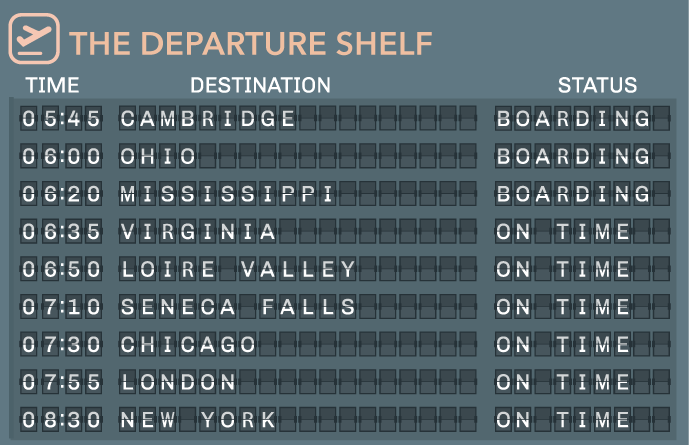
The Departure Shelf is The Endpaper Society’s monthly reading list for travelers who want to go deeper.
The Handmaid’s Tale by Margaret Atwood
Setting: the Republic of Gilead (Cambridge, Massachusetts), near future
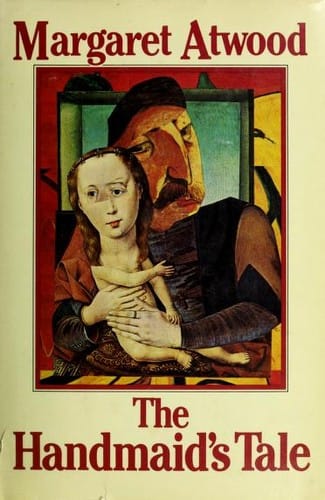
In a near-future America renamed Gilead, fertile women are assigned as Handmaids to powerful men and stripped of all other identity. Atwood wrote this novel in 1985 and has said, repeatedly, that she invented nothing — every horror in the book has a historical precedent. Offred’s narration is one of the most controlled and devastating voices in twentieth-century fiction.
Where it takes you: Cambridge, Massachusetts — specifically Harvard University, whose grounds Atwood transformed into Gilead’s central command. The actual streets, river, and institutions of Cambridge carry the novel’s geography underneath the present, and walking them with the book in mind is one of the more unsettling literary experiences available in the American Northeast.
Little Fires Everywhere by Celeste Ng
Setting: Shaker Heights, Ohio, 1997
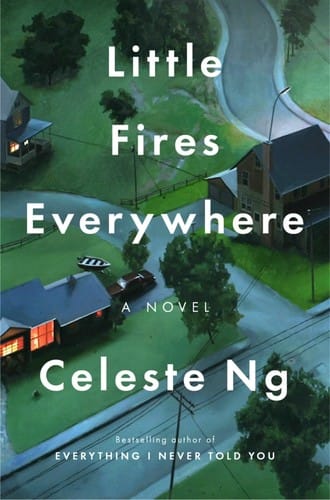
Two families — the rigidly organized Richardsons and the nomadic artist Mia Warren and her daughter — collide in Shaker Heights, the carefully planned suburb of Cleveland, when a custody battle forces everyone to decide what they actually believe about motherhood, choice, and who gets to be a good person. Ng’s novel is about race, class, and the specific kind of liberalism that congratulates itself before it’s done the work.
Where it takes you: Shaker Heights — a real suburb of Cleveland, designed in the early twentieth century as a model planned community, still remarkable for its architecture and its complicated history of racial exclusion and eventual integration. Ng grew up in Shaker Heights, and the novel’s geography is exact.
The Help by Kathryn Stockett
Setting: Jackson, Mississippi, 1962
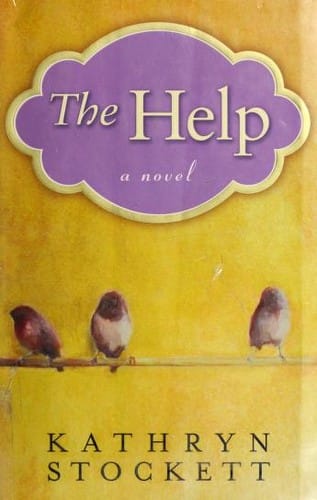
Three women — two Black domestic workers and a young white writer — collaborate secretly on a book about the experience of the women who raise white children while being denied basic human dignity in the same households. Stockett’s novel has generated significant debate about who gets to tell which stories, debates that are worth engaging with. It is also a vivid document of Jackson, Mississippi in the year before the Civil Rights Movement came to the state’s capital.
Where it takes you: Jackson, Mississippi — the Mississippi Civil Rights Museum, opened in 2017, tells the full story of the movement in one of the most comprehensive civil rights museums in the country. Medgar Evers’s house, where he was assassinated in 1963, is a short drive from the neighborhood the novel describes.
Hidden Figures by Margot Lee Shetterly
Setting: Hampton, Virginia and the NASA facilities, 1940s–1960s
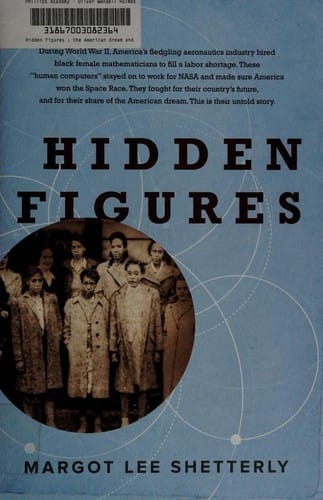
The true story of the Black women mathematicians who calculated the trajectories that put American astronauts into space — and who did it while navigating both racial segregation and the expectation that their gender made them support staff rather than scientists. Shetterly grew up in Hampton, Virginia, and her father worked at NASA Langley. This is a book written from the inside of the community it honors.
Where it takes you: Hampton, Virginia — NASA Langley Research Center, where the “human computers” worked, offers tours and has exhibits on this history. The Virginia Air and Space Science Center in Hampton has a permanent exhibit on the Hidden Figures story. The neighborhood where many of these women lived, within walking distance of the research center, is a community that persists.
The Alice Network by Kate Quinn
Setting: France, World War I and 1947
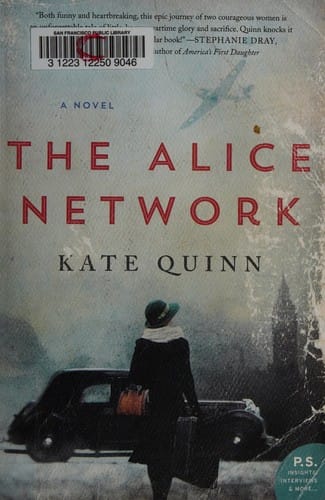
A young American woman searching for her missing cousin in postwar France crosses paths with a scarred, bitter former spy — who turns out to have been one of the most decorated female agents of the Great War. Quinn based her heroine on Louise de Bettignies, a real Lille native who ran one of the most successful Allied spy networks of WWI. Women’s Equality Month is the perfect time to remember that women have been doing the most dangerous work all along.
Where it takes you: Lille, in northern France, is the heart of this story — a city that endured four years of German occupation and has barely been touched by literary tourism. The network’s real routes ran through cafés and shops that still stand.
The Women’s Room by Marilyn French
Setting: Boston suburbs and Harvard, 1950s–1970s

Mira Ward’s suburban marriage disintegrates; she goes to Harvard as a graduate student in her thirties; she discovers feminism and the community of women who are naming what has been done to them. French’s 1977 novel was a landmark of second-wave feminism — angry, long, and written with the authority of someone who had lived exactly what she was describing.
Where it takes you: The Boston suburbs and Cambridge of the 1950s through 1970s — a specific social geography of domestic containment followed by the particular freedom of graduate school in a city that was simultaneously traditional and radical. The Harvard campus and surrounding areas carry this history in their bones.
Women’s equality is not a completed project. These novels are documents of the fight — past and present — and of the specific costs that women have paid to move the line forward. The places in these books are real. The history in them is real. So is the work still ahead.
Planning a historical or literary trip? Let’s talk.
Get the reading list first.
Trip announcements, curated reading lists, and the occasional dispatch — before anyone else.